Comparable sales
Look for recent sales with a similar extension, length, structure, and likely commercial use. One exceptional sale is not a reliable average.
 DomainSalesLander
Price it, choose a sale path, publish the offer, and complete a secure transfer.
There is no single formula for domain value. Use evidence to set an asking price, then keep your private minimum separate.
Look for recent sales with a similar extension, length, structure, and likely commercial use. One exceptional sale is not a reliable average.
Consider whether the name is memorable, easy to spell, and immediately useful to a real business, product, or audience.
Include renewal fees and the time you are willing to wait. A realistic price can be more valuable than years of unanswered inquiries.
Keep a private floor, an asking price, and a small set of reasons that support the value. Do not invent demand or competing offers.
Your own sales page converts direct visitors. Marketplaces, escrow providers, and registrars can support discovery, payment, and transfer.
Review comparable sales, the domain's commercial use, extension, clarity, and renewal cost. Decide what you will ask and the lowest offer you would accept.
Use a marketplace for distribution, your own domain for direct visitors, or both when your listing terms allow it.
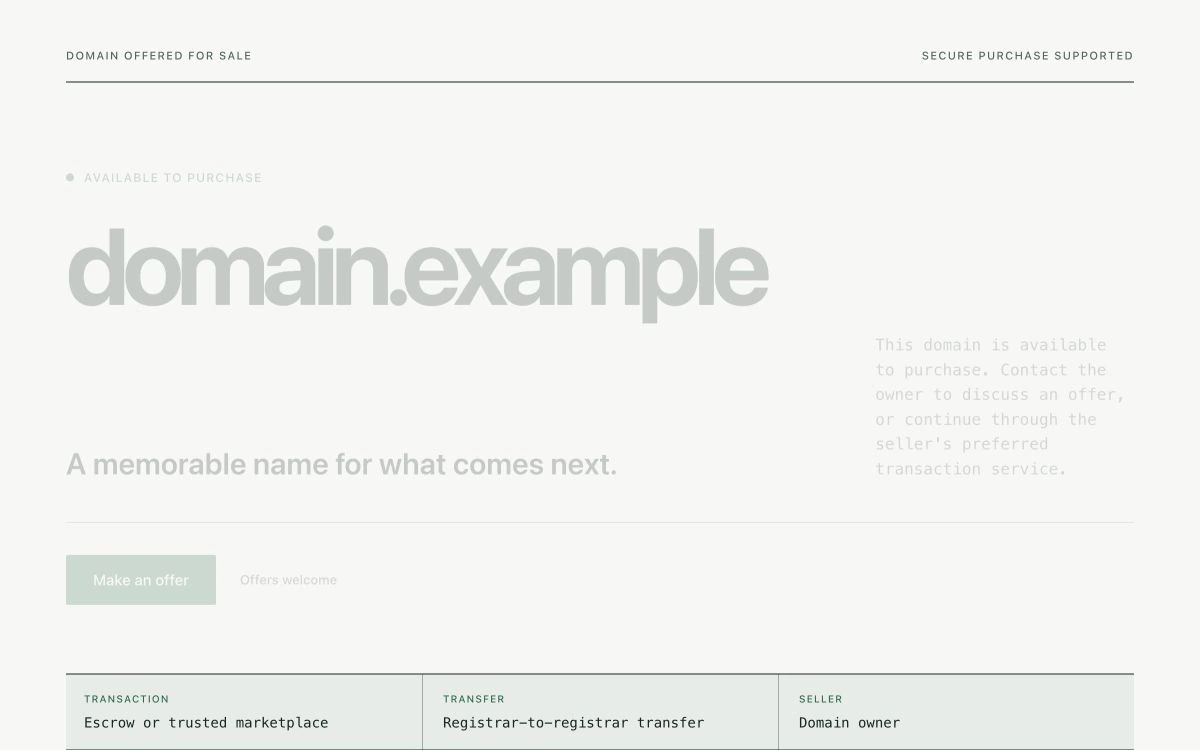
State that the domain is for sale, show the price or offer route, and give the buyer one clear contact or transaction action.
Confirm the offer, payment route, transfer timing, and who will pay transaction fees before you begin the transfer.
Choose a service both parties can verify independently. Never share registrar passwords, private keys, or authentication codes.
Follow the registrar or transaction service instructions, keep records, and confirm payment conditions before releasing control.
Verify every service from its official website. Do not send an authorization code or change account ownership because an email claims payment is complete.
A domain that resolves to an error, a generic parking page, or an unrelated site leaves serious buyers guessing.
Put the exact domain and its availability near the top. The buyer should understand the purpose without scrolling.
Use a fixed price, invite offers, provide direct contact, or link to a trusted transaction page.
Name the contact or transaction route and briefly explain how payment and transfer will be handled.
Connect the intended hostname and verify that it opens the finished sales page over HTTPS.
Choose the route that fits the buyer, then keep ownership and payment boundaries explicit.
No. You can receive direct inquiries from a page on your domain. A marketplace can still help with buyer discovery, checkout, escrow, or transfer support.
Show a fixed price when you are prepared to accept it. Invite offers when the value depends on the buyer or you want room to negotiate.
Not by itself. The exact hostname must serve the intended page over HTTPS before the page is ready to share.